Care and specialist advice
For routine care, remove grit and use a cleaner suitable for travertine as directed. If cleaning leaves dull patches, ingrained marks or open holes, consult a stone restoration specialist before escalating to stronger chemicals, polishing or DIY filling.
What should you clean travertine with?
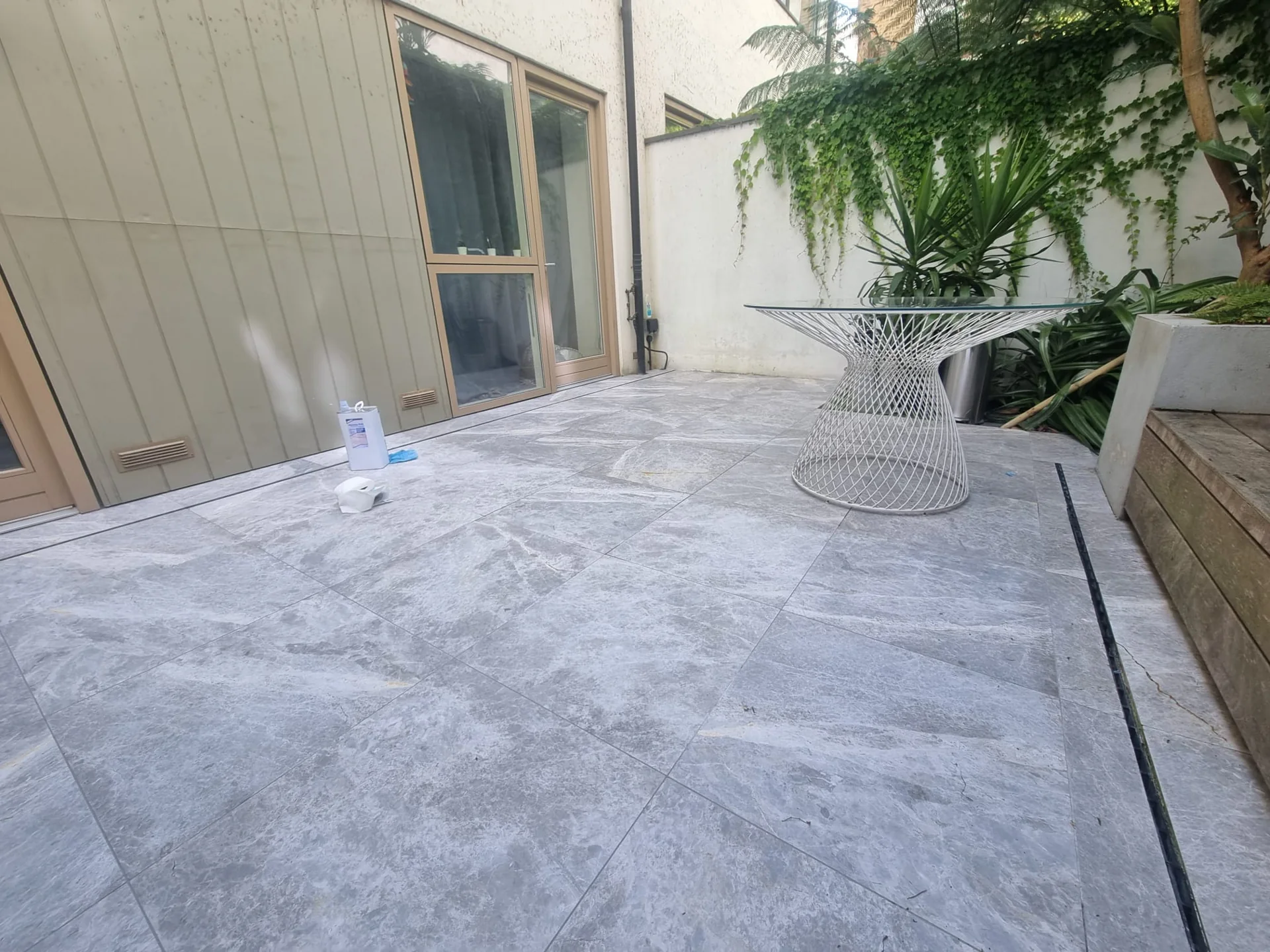
A cleaner described as pH-neutral and suitable for natural stone is the sensible default. Dilute it as the label instructs rather than using it neat on the assumption that stronger works better, and change the water as it becomes dirty so you are not spreading the same soil across the floor.
Sweep or vacuum before washing. Grit is abrasive, and walking it across a travertine floor can scratch or dull the finish. Use a soft mop or cloth, and dry the surface rather than leaving standing water on it, particularly around the edges of tiles and along grout lines.
Work in sections on a large floor so that no area stays wet for long. If you are unsure whether a product suits your tiles, test it somewhere inconspicuous first and look at the area in daylight afterwards.
Which cleaners damage travertine?
Travertine is a calcareous stone and can be etched by acids. Check suitability before using bathroom or general-purpose cleaners, especially the following:
- Limescale removers and descalers.
- Vinegar, lemon juice and any citrus-based spray.
- Household bleach or strongly alkaline degreasers unless the stone and product suppliers confirm suitable use.
- Cream cleaners and scouring powders sold for ceramic or enamel.
- Abrasive pads, wire wool and melamine sponges.
Acidic products etch the surface, which is a change in the finish rather than a stain. Abrasives do the same thing mechanically. In both cases the mark reflects light differently from the stone around it, and no amount of further cleaning will remove it, because there is nothing sitting on the surface to lift.
Our guide to etching and staining explains how to tell the two apart.
How do you clean travertine in a bathroom?
Bathrooms combine the two things travertine handles least well: standing water and acidic cleaning products aimed at limescale. Hard water leaves deposits on the stone, and the usual response of reaching for a descaler is what causes the damage.
Wipe surfaces dry after use so deposits have less chance to build up, and ventilate the room so the stone is not permanently damp. Where deposits have already formed, a stone-safe product is the right starting point rather than a bathroom descaler.
Dullness may come from residue, deposits, wear or etching, so appearance alone does not identify the treatment. Avoid trying progressively stronger products before the cause is understood. Limescale or dull marble covers how to tell the difference before you buy another product.
What about the holes in the surface?
Travertine forms with natural voids. Tiles are usually supplied filled and finished, but filler can work loose over time, and traffic or cleaning can open small holes that were previously level. Water and soil then collect in them, which makes the floor look patchy even when it has just been cleaned.
This is not a cleaning problem. Refilling and refinishing brings the surface back to a single level and a single finish, and it is work for a restorer rather than a maintenance routine.
Why holes appear in a travertine floor sets out what to look for and how the repair is matched to the surrounding finish.
Does travertine need sealing?
An impregnating sealer is intended to slow absorption, which buys time to wipe up a spill before it soaks in. It does not make the stone waterproof, and it does not protect against acid damage, because the acid attacks the stone itself rather than sitting on top of a barrier.
Whether a surface needs resealing, and how often, depends on the stone, the finish and how the area is used. Ask which product is proposed and why it suits your tiles, rather than applying something general on a schedule.
What honing, polishing and sealing each address covers the distinction, and the stone cleaning service guide explains when professional cleaning is the right next step.
When is cleaning no longer the answer?
Routine cleaning removes surface dirt. Professional cleaning may be appropriate for ingrained soil or residue, while etching, scratches and open holes may need refinishing or repair. A floor that looks unchanged after cleaning needs assessment, rather than an automatic assumption that it requires polishing.
Photograph the floor overall and close up, in ordinary daylight, and note which areas are used most heavily. Comparing stone cleaning project photographs is a useful way to see the difference between a dirty floor and a worn one.
When you are ready to ask, our assessment checklist sets out what to include.
This guide explains general considerations. The appropriate treatment and expected result need assessment of the actual surface.
General care reference: Natural Stone Institute: care and cleaning. Follow the instructions for your stone and treatment; general guidance is not an assessment of your surface.