Care and specialist advice
Blot fresh spills promptly and follow the recommended routine for your stone. A persistent colour change and a dull etch mark need different treatments. Ask a restoration specialist to assess the mark before trying stain removers or polishing products.
Is it etching or a stain?
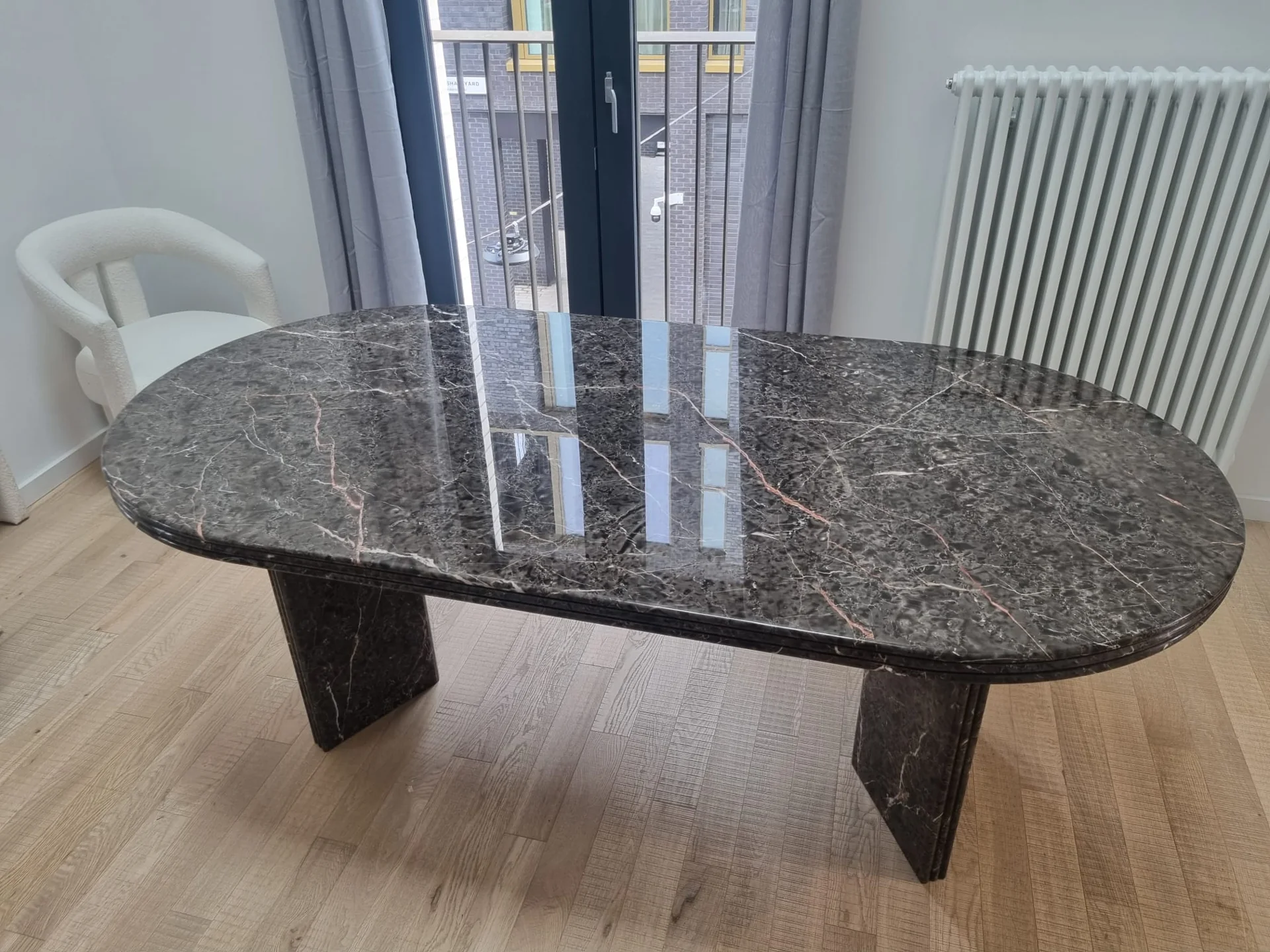
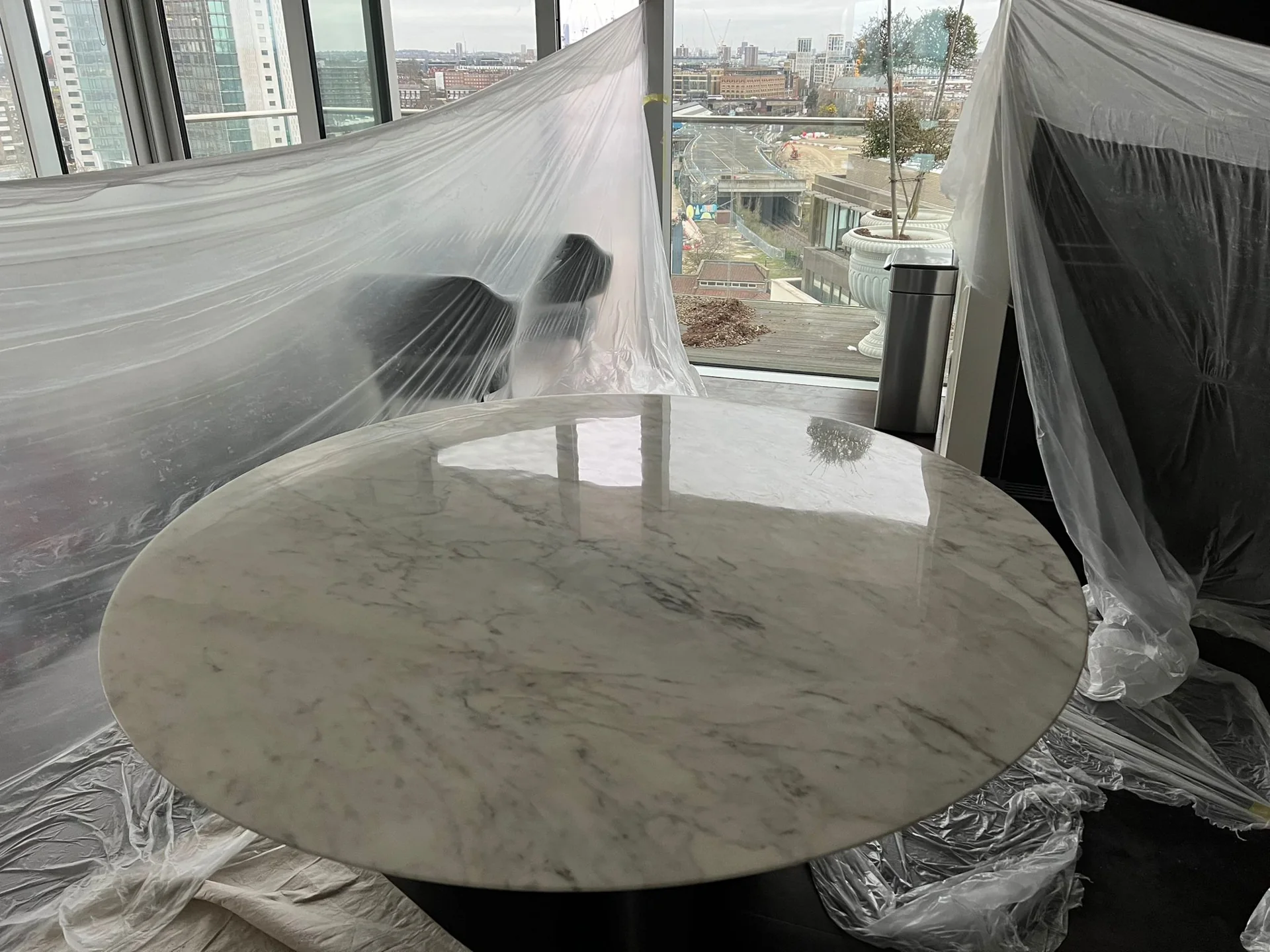
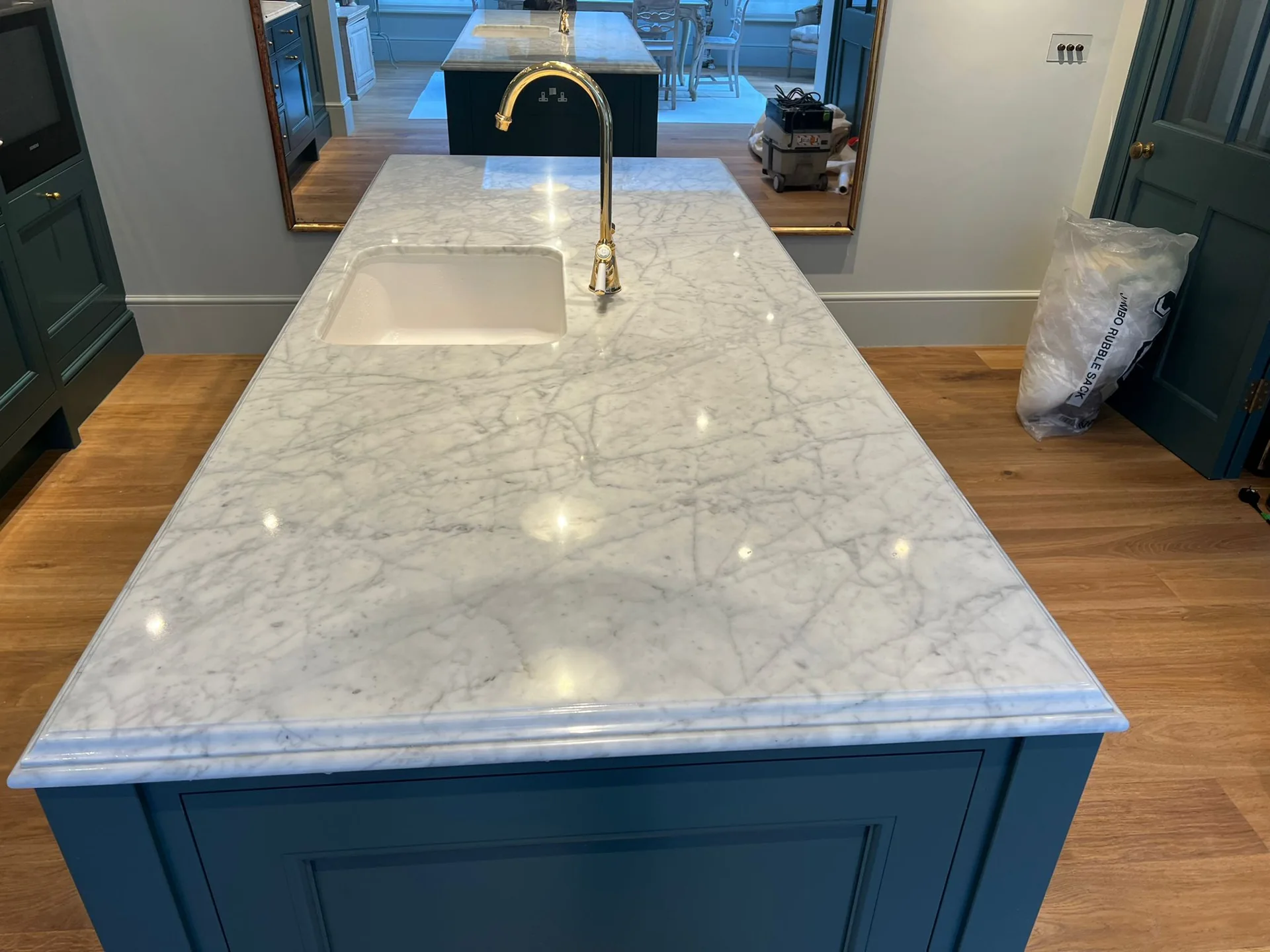
Acid can etch acid-sensitive stone such as marble, leaving a change in the surface finish. Staining is discolouration associated with a substance entering the stone. A sealer does not make marble immune to acid damage.
Take one photograph from above and another from a low angle. Explain whether the mark appears darker, lighter, duller or rougher than the surrounding area. You are documenting the symptom; you do not need to name the treatment.
Further reading: Natural Stone Institute: care and cleaning.
Why does marble mark more readily than granite?
Marble, limestone and travertine are calcareous stones. Their mineral content reacts with acids, which is why a spill of wine, citrus, vinegar or a descaling product can leave a visible change in the finish on a surface that was otherwise sound. Granite is composed differently and does not respond to household acids in the same way, which is one reason the two materials are treated differently in quotations and in aftercare advice.
This is a property of the material rather than a fault in the installation or a sign that earlier work was done badly. It also explains why a mark can appear on a surface that has been sealed: an impregnating sealer is intended to slow absorption, not to place a barrier between an acid and the stone beneath it.
Knowing which family your stone belongs to changes the questions worth asking. If you are not certain, say so in your enquiry rather than guessing.
Further reading: Stone Federation: natural stone in the home.
What should you tell a restorer?
| What you notice | What to tell us |
|---|---|
| A dull ring or splash | What spilled, when it happened and whether the sheen changed. |
| A darker or coloured patch | Any known substance, how long it remained and what has already been tried. |
| A rough edge or open line | Whether there is a chip, a gap or any change over time. |
Do not use an acid or a scratch test to identify an installed surface. If you have a supplier invoice or an offcut with a material label, include that information instead.
Can an etched marble surface be restored?
A useful assessment considers the material, existing finish, extent of the mark and previous treatments. Ask whether the proposed work is local or extends across a larger area, how the finish will be matched and what may remain visible.
Read about worktop refinishing and compare existing marble projects. For day-to-day care after the work, see our stone-care guide.
This guide explains general considerations. The appropriate treatment and expected result need assessment of the actual surface.