Care and specialist advice
Everyday cleaning helps maintain a finish, but honing, polishing and sealing have different purposes. A stone restoration specialist can assess the existing surface, explain which work is suitable and agree the intended finish before treatment begins.
What is the difference between honed and polished?
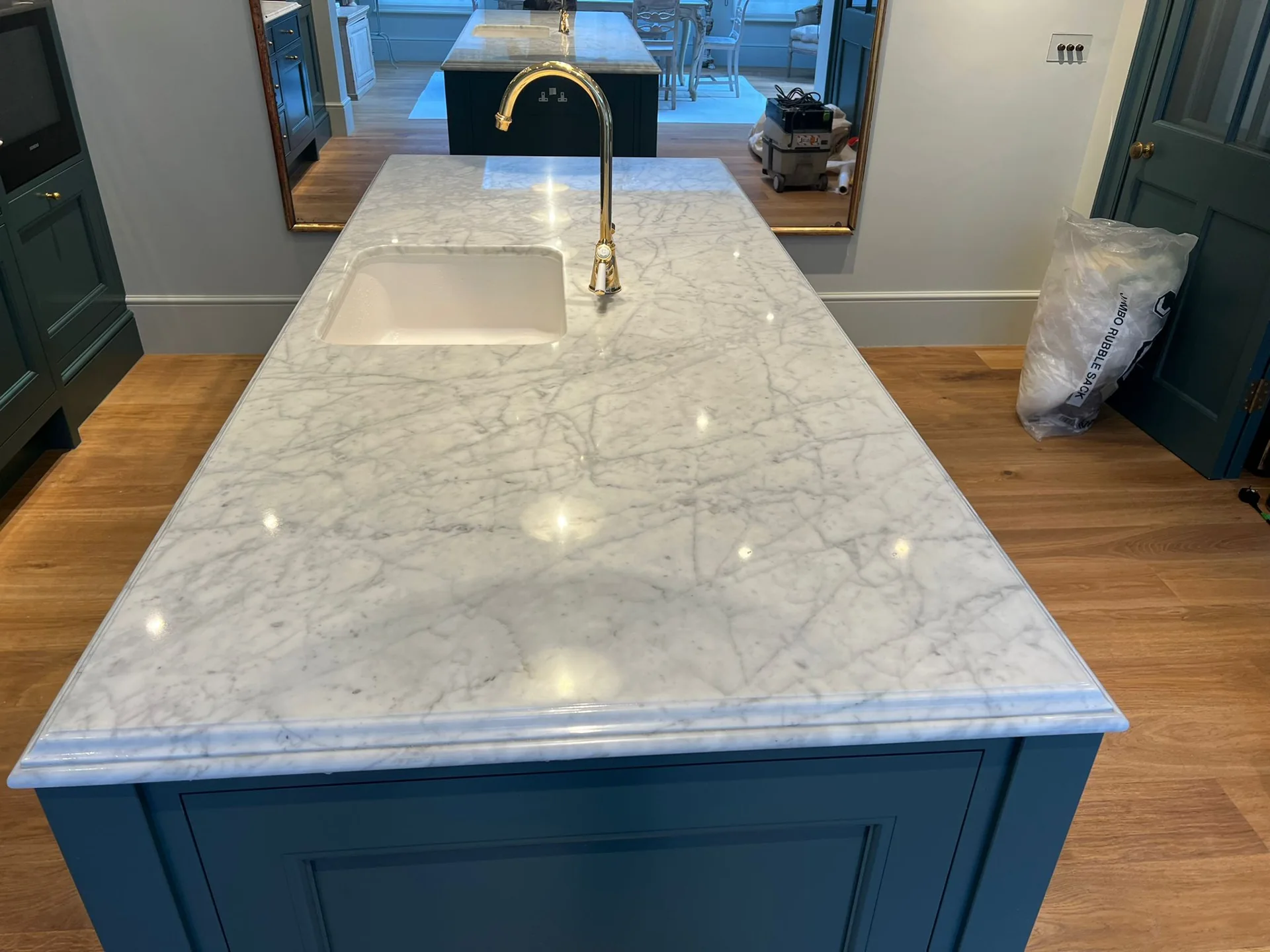
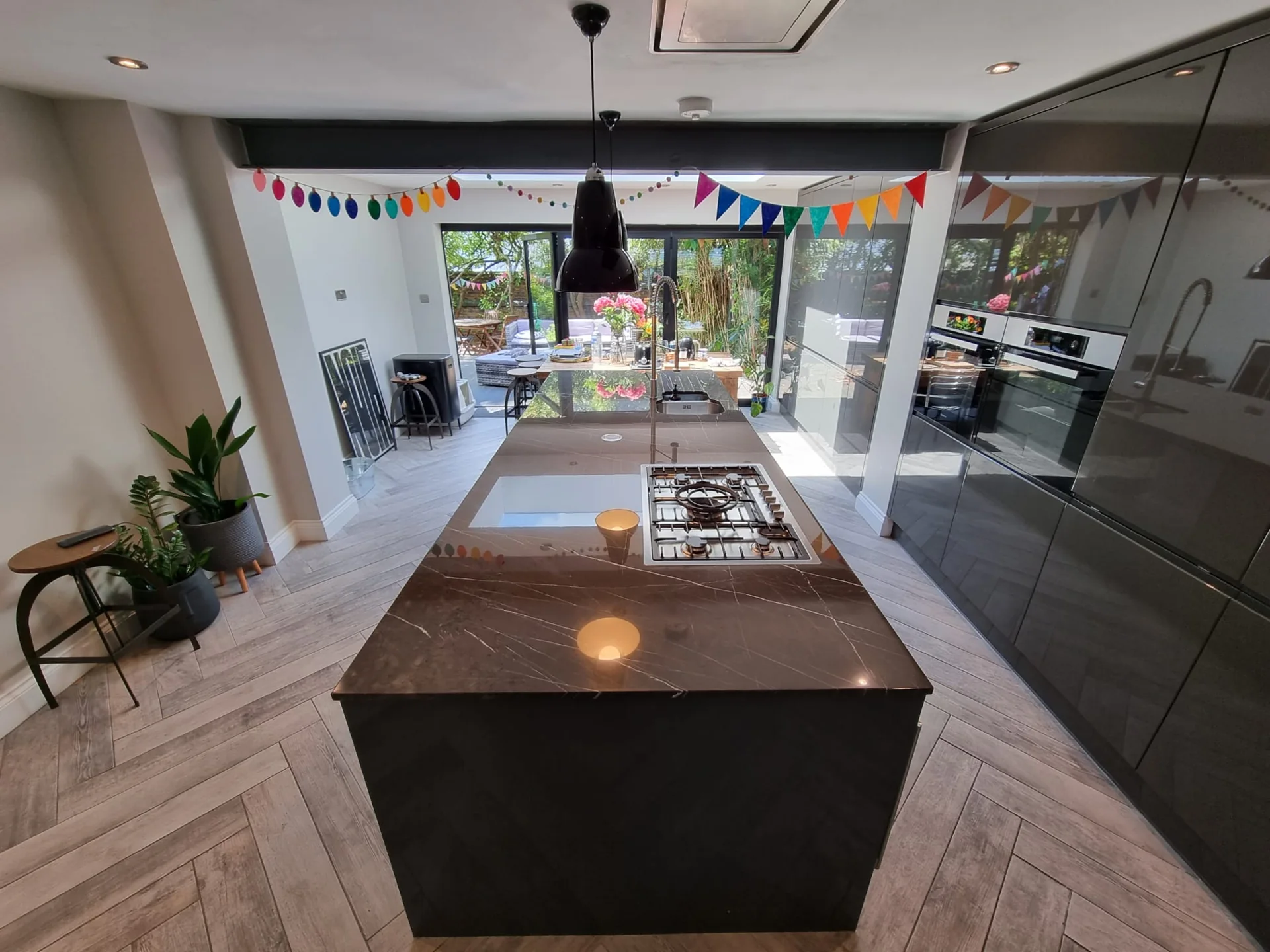
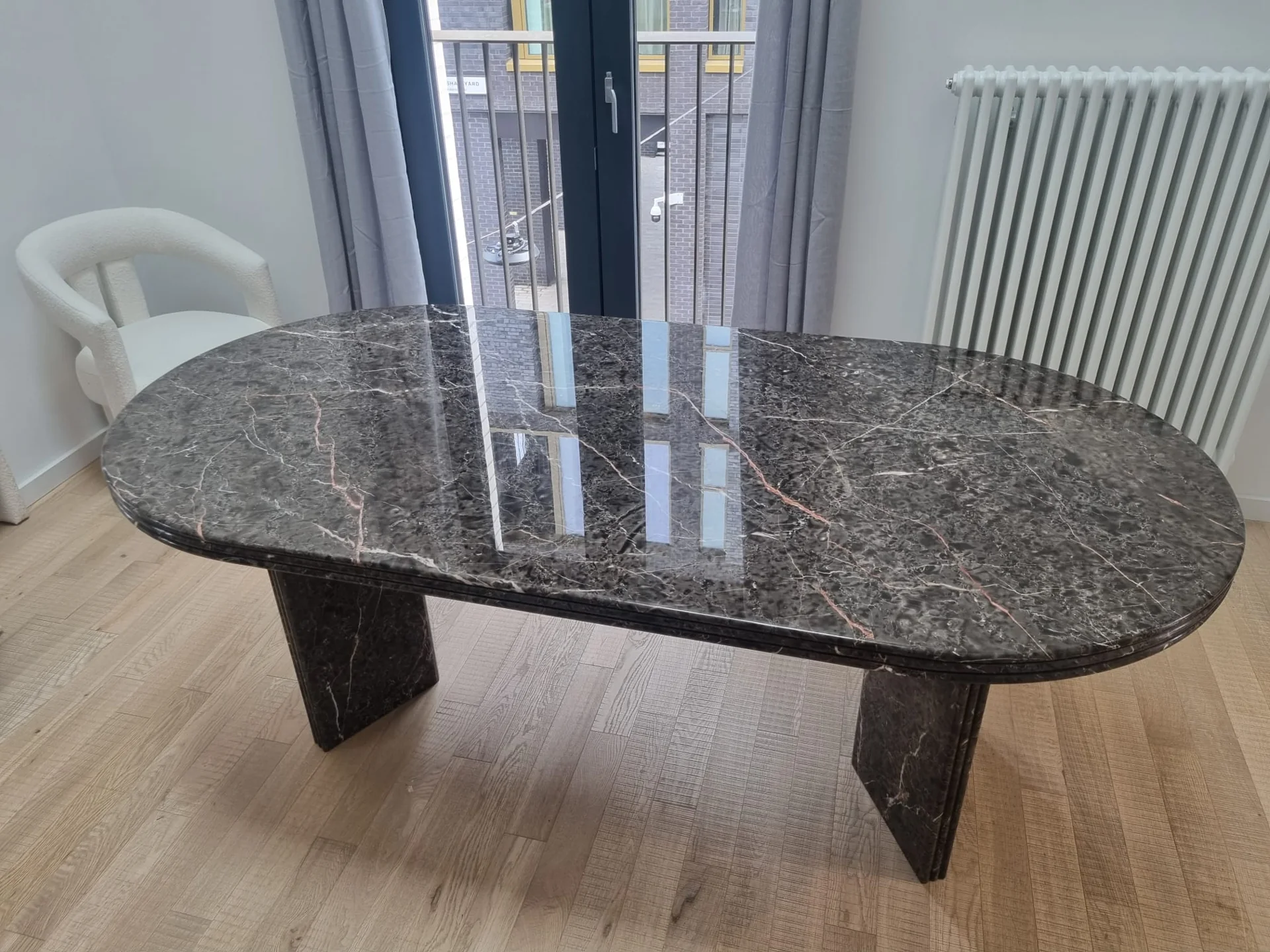
A polished finish reflects light differently from a honed, brushed or textured finish. Stone Federation emphasises that the choice of finish affects both appearance and suitability for the setting.
Photograph an area whose finish you like, or show an example of the effect you have in mind. Ask whether that finish is suitable for your actual stone and its location, rather than relying on the word “polished” alone.
Further reading: Stone Federation: natural stone in the home.
What should a stone restoration quotation cover?
Ask the person quoting to separate cleaning, surface refinishing, individual repairs and any proposed sealing. Which step addresses the wear or damage you can see? Does the quote cover the whole floor or only selected areas? Will joints and edges need separate attention?
There is no useful universal treatment schedule for every stone surface. The quotation should describe the proposed result and the work for your installation. Our honing and polishing section provides a starting point for that discussion.
Does sealing protect marble from etching?
Impregnating products are intended to reduce absorption; they do not turn stone into an impermeable surface. Product suitability and maintenance needs should be established for the particular material.
Ask which product is proposed, why it is appropriate, how long the surface needs before use and what cleaning routine should follow. Keep that information with the project quotation.
Further reading: Natural Stone Institute: sealing and stone care.
In what order does the work usually happen?
These stages are not alternatives, and the sequence matters. A surface is normally cleaned before anything else, because grit and residue left in place can affect the work that follows. Repairs to chips, open joints or cracks are generally addressed before refinishing, so that the filled areas are brought to the same level and the same finish as the stone around them. Refinishing then establishes the appearance of the surface. Any sealing comes last, once the stone is clean, finished and dry.
This is why a quotation that gives a single figure for the whole job is harder to compare than one that separates the stages. If one quotation includes repairs and another does not, the lower figure is not necessarily the better value, and the difference may only become clear once the work has started.
Ask which stages your quotation covers and which have been left out. Reading the service guide alongside each quotation makes the gaps easier to see.
What can photographs tell you about a finish?
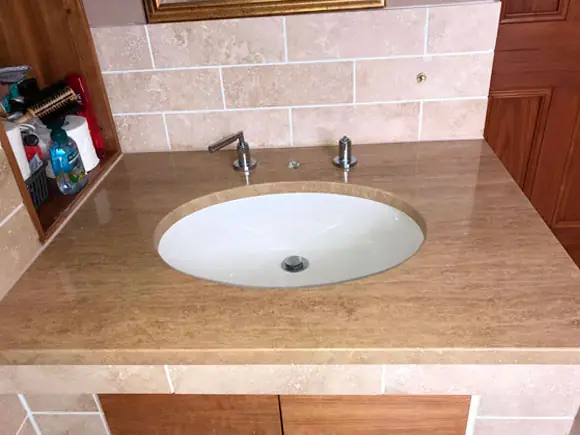
Compare the marble gallery and granite worktop photographs for examples of surfaces and reflections. A photograph cannot establish a treatment sequence, slip performance or an identical result for a different stone.
If you are ready to enquire, use our assessment checklist to gather the useful details.
This guide explains general considerations. The appropriate treatment and expected result need assessment of the actual surface.