Care and specialist advice
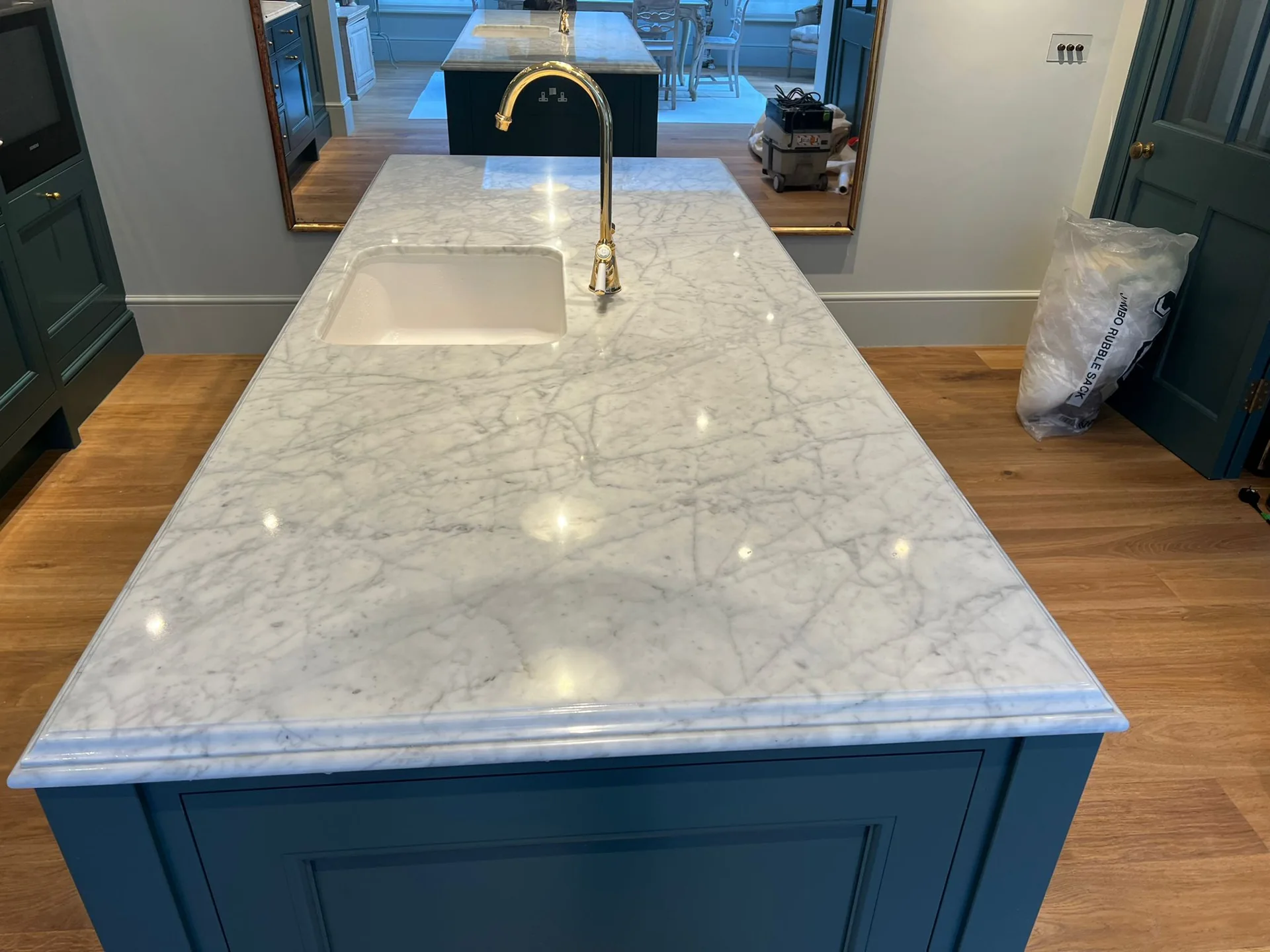
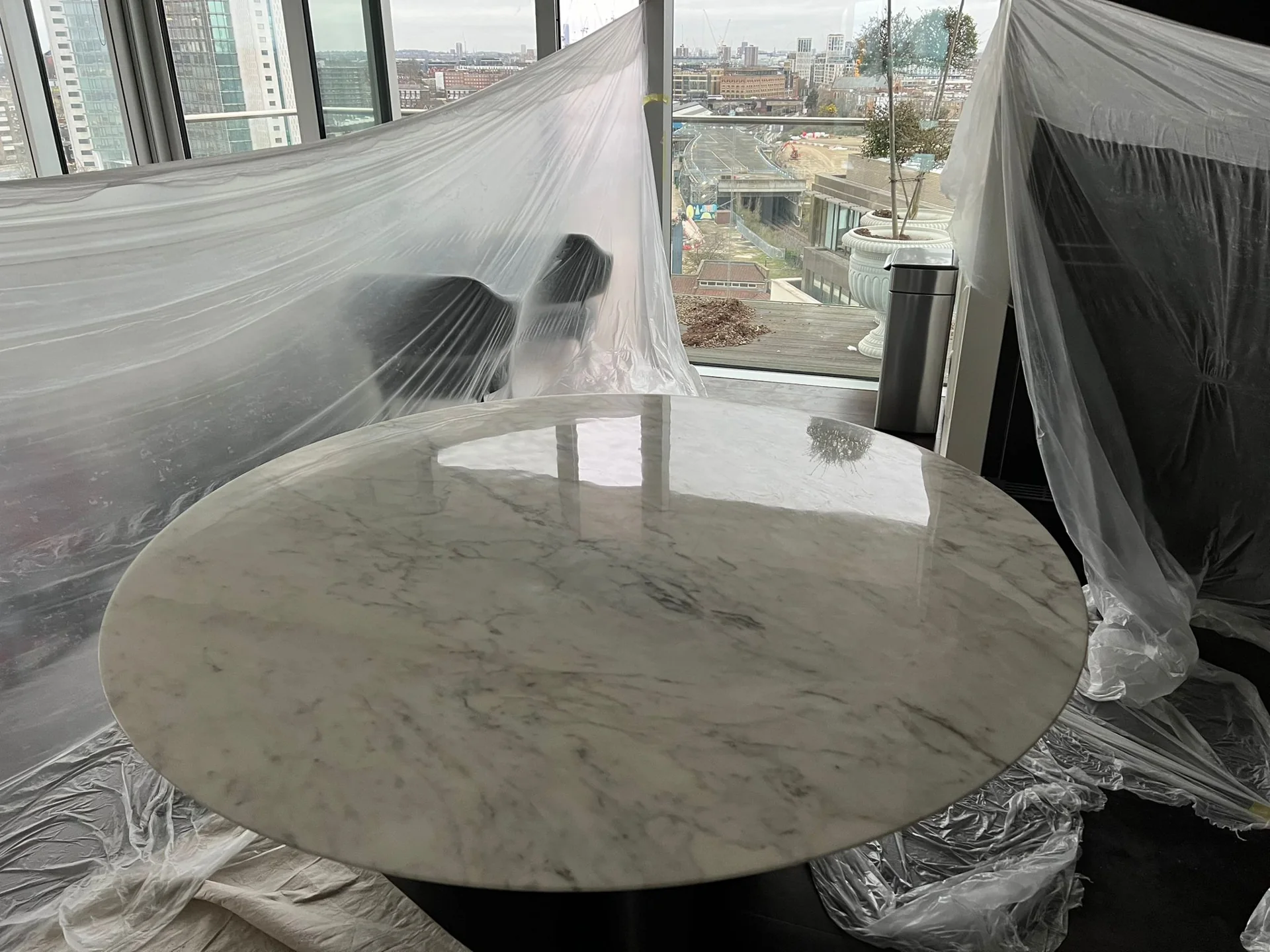
Drying the surface after use can help reduce deposits. If marks persist or the stone is dull, ask a specialist to distinguish deposits from finish damage before using descaler, abrasive pads or polishing products. Treatment should suit the actual stone and nearby fittings.
Identify the surface before choosing a product
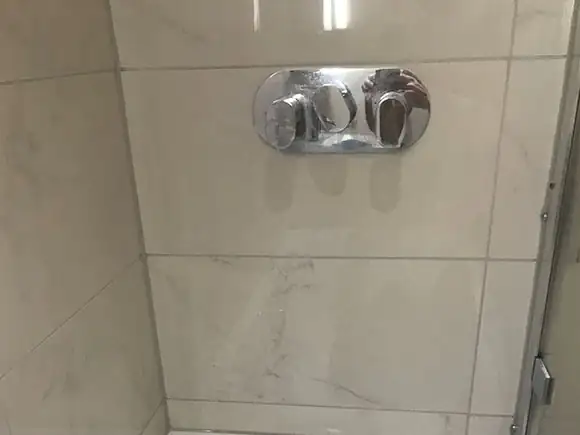
Check your supplier paperwork or previous aftercare instructions for the material and finish. Marble, limestone, granite, ceramic and composite surfaces should not be treated as interchangeable simply because they share the same bathroom.
Acidic cleaners can etch acid-sensitive stone. Stone Federation's limestone guidance specifically warns against bathroom and kitchen limescale cleaners on that material. If the surface is unknown, avoid experimenting with a stronger cleaner to see what happens. Keep the product name and ingredient information for the assessment instead.
Further reading: Stone Federation: Irish blue limestone care guidance.
Describe deposits, reflection and joints separately
Photograph the whole shower or vanity, then the affected area. Include a view showing reflected light if the concern is a dull patch. Say whether the mark appeared gradually or followed a spill or cleaning product. Record where it occurs: around a tap, on a horizontal ledge, along a joint or across a larger area.
A description of the appearance is more useful than a confident guess about the cause. Our guide to etching and staining explains the difference between a change in finish and a change in colour. These can coexist with surface deposits, so one treatment may not address everything you see.
Separate cleaning from finish and joint work
Ask what the proposed cleaning is intended to remove and whether the finish needs separate attention. A clean surface can still show etching or wear. Likewise, a change to the stone's appearance is a different question from failed grout or silicone.
Discuss stone cleaning, finish restoration and grout and silicone work as separate parts of the assessment. Explain any recurring dampness or known leak and ask whether another trade needs to investigate before cosmetic work is planned. A photograph of a joint does not establish the condition of concealed waterproofing.
Keep a clear record of what has been used
Write down the cleaner names and when they were last applied, including any descaler or homemade mixture. If there is existing maintenance advice, send a photograph of it with the enquiry. This avoids asking the assessor to infer a treatment history from the appearance alone.
Once the work is agreed, ask for written care instructions that cover the stone and nearby fittings. Keep them where anyone cleaning the room can find them. See everyday care for stone surfaces for a simple record to maintain.
To discuss a bathroom, use the enquiry checklist and send photographs and the approximate affected area. Let the assessment determine which treatment is suitable.
This guide explains general considerations. The appropriate treatment and expected result need assessment of the actual surface.