Care and specialist advice
Keep the damaged area undisturbed and photograph it before applying a filler or adhesive. A stone repair specialist can assess the material, edge profile, stability and intended finish, then explain what a repair could achieve and any visible limitations.
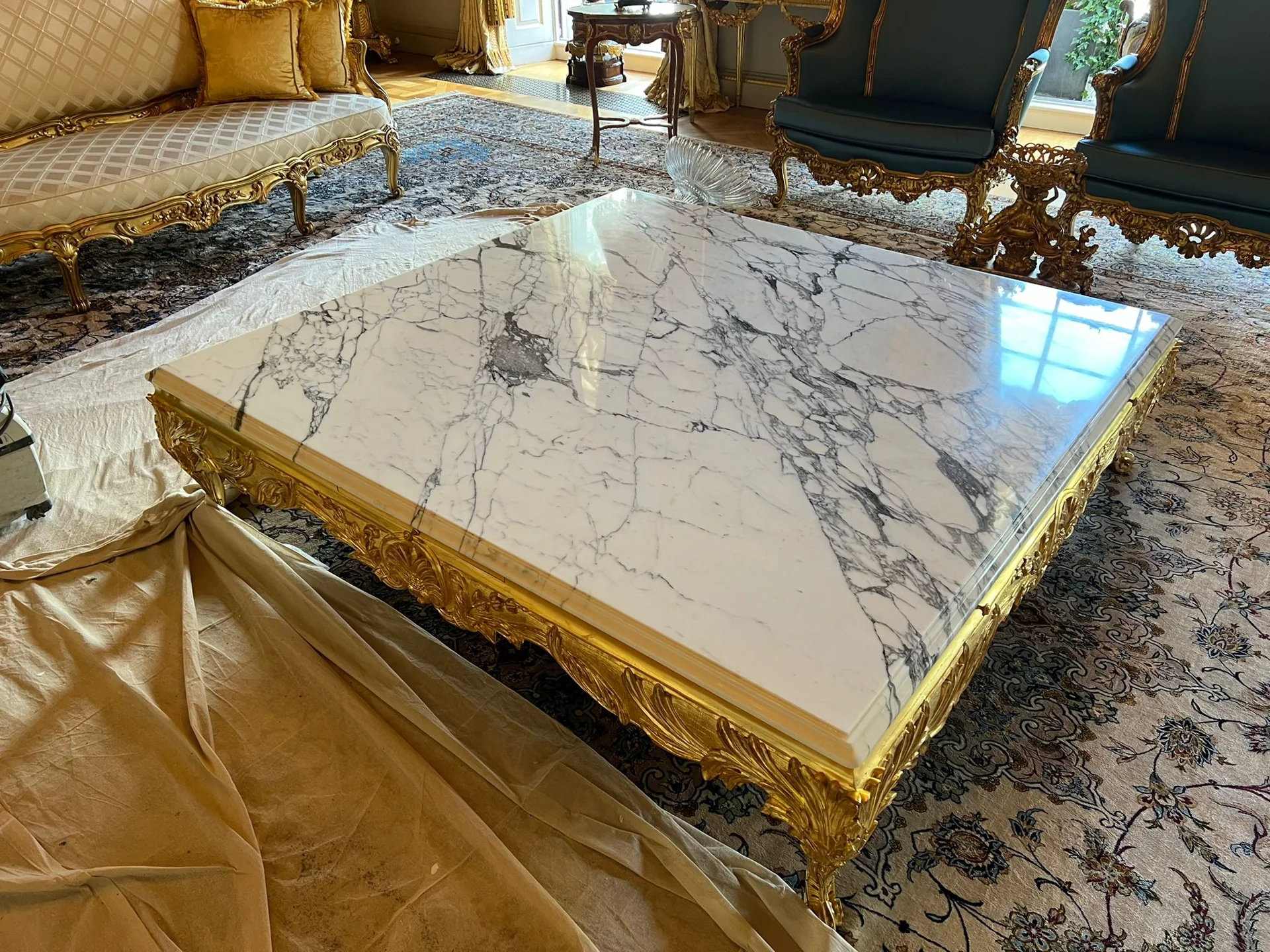
Record the damage without disturbing it
Photograph the whole surface first, then the damaged area from above and from the side. Keep a joint, edge or familiar object in view to explain the scale. Say whether the damage appeared after an impact, has changed over time or was present when the surface was installed.
Keep any detached pieces safely for assessment. Avoid trying to force a broken piece back into place or testing a damaged surface by leaning on it. Describe whether it is near a sink, hob, table support, threshold or another point that affects how the surface is used.
Separate the visible mark from the cause
A photograph can show a line or missing piece, but it cannot establish the condition of everything beneath the surface. Ask whether the assessment needs to consider support, movement, the installation or an earlier repair. That question matters particularly when a crack has reopened or the surrounding area has also changed.
Tell the assessor about loose tiles, changed joints or any known previous work. Do not describe a crack as purely cosmetic until its significance has been assessed. The stone repair service section explains the starting point for discussing chips, cracks and worn edges.
Discuss visibility in normal use
Ask how the proposed repair would look under the lighting in your room and from the angle at which you normally see it. Discuss colour, pattern, sheen and the edge profile. A successful practical repair and an undetectable repair are different expectations, so settle the intended result before agreeing the work.
Existing stone repair photographs can help start that conversation. They do not guarantee the same result for another stone. The Natural Stone Institute recommends professional attention for deeper scratches and nicks. Its care guidance supports asking for an assessment rather than assuming that a DIY filler is suitable for any damage.
Further reading: Natural Stone Institute: stone care and surface damage.
Compare repair and replacement on the same basis
Ask what each option includes: the affected area, any removal, treatment of surrounding joints and the intended finish. If replacement is being considered, ask how an appropriate material and finish would be matched. If repair is proposed, ask what might remain visible and what conditions could affect its performance.
Keep the comparison specific to your surface. There is no useful blanket promise that repair will always be cheaper, invisible or suitable. Our guide to restoration quotation scope helps you compare what is actually included.
For a useful first discussion, follow the photograph and enquiry checklist, then tell us about the damaged stone.
This guide explains general considerations. The appropriate treatment and expected result need assessment of the actual surface.